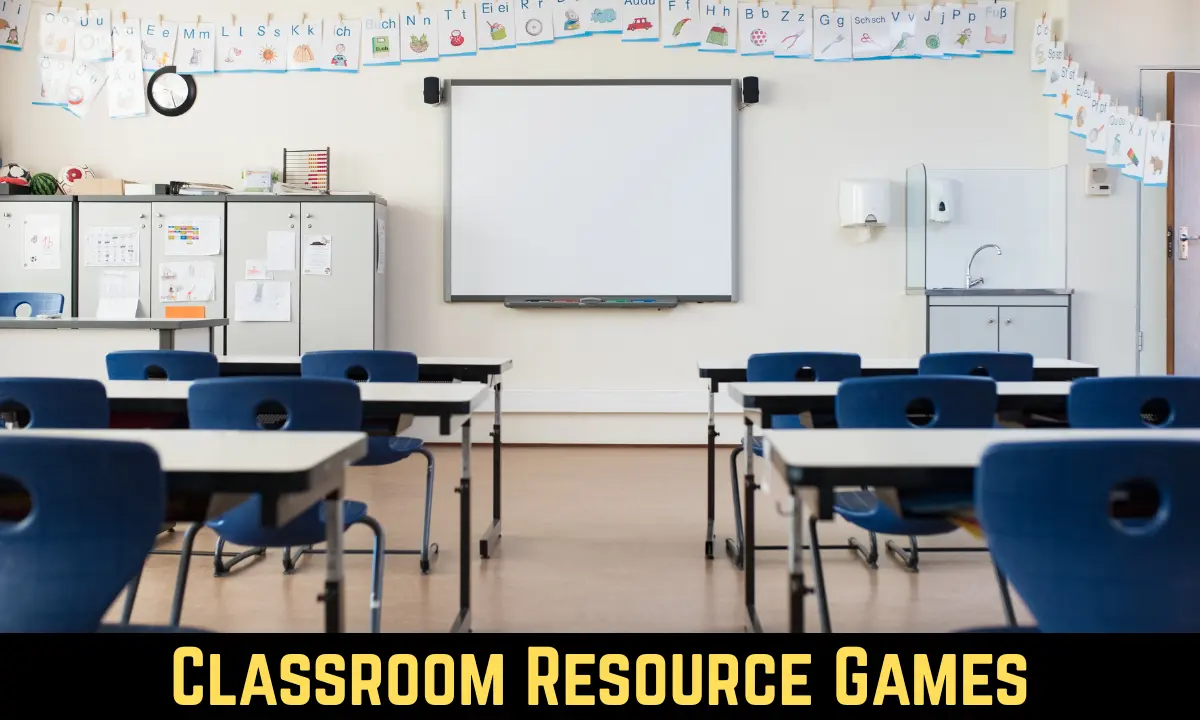
Classroom resources games are innovative educational games that enhance involvement, learning, and the effectiveness of studying in pupils. These games are made to learn while having fun, which is supposed to help classroom teaching. They motivate the students, promote collaboration, and they facilitate complex subjects by means of hands-on practice.
Educational tools used in today’s classroom include worksheets, online quizzes, presentations, flashcards, educational videos, and interactive games. They allow teachers to focus on engaging students so that they are learning through doing rather than just listening to lectures.
What are Classroom Resources Games?
You learn through practice using classroom resources, games, activities or teaching material. They are designed specifically for improvement in academic knowledge, combined with the development of communication, creative, and problem-solving skills.
You can use those resources at:
- Physical classrooms
- Smart classrooms
- Online classes
- Group learning activities
- Home learning sessions
These are perfect for learners of all ages and skill levels.
Why Classroom Resources Games Are Important
Learning is more effective when students love the investigation. Teaching games help you make lessons that can be average, into fun activities where students stay focused and motivated.
Main Benefits
Better Student Engagement
Interactive games keep students engaged during lessons so they don’t tune out or drift off.
Improved Understanding
Education games provide visuals & practice activities, with the option of teamwork to make otherwise complex topics easier to understand.
Stronger Communication Skills
Group work involves speaking, listening, and working well in a team.
Increased Confidence
Answering questions, solving challenges, and participating in competitions boost student confidence levels.
Enhanced Memory Power
In interesting activities, students remember for a long time, not like traditional lessons.
Different Types of Classroom Resources Games
1. Quiz-Based Learning Games
Quiz games are one of the most common activities in class, as they help improve knowledge and allow us to think faster.
Examples:
- General knowledge quizzes
- Science trivia games
- Mathematics challenges
- History question rounds
Popular educational quiz platforms:
- Kahoot!
- Quizizz
They provide tools that allow teachers to make live quizzes and interactive competitions, which are held in classes.
2. Vocabulary and Language Games
Language games prepare students to enhance their vocabulary, spelling, reading and communication skills in a playful manner.
Popular Activities:
- Word search puzzles
- Crossword games
- Spelling competitions
- Sentence-building challenges
- Hangman
These activities are ideal for most younger learners and language learners.
3. Mathematics Games
Math games provide a fun way for students to engage in calculation and problem-solving activities.
Common Math Activities:
- Number bingo
- Puzzle-solving races
- Flashcard challenges
- Multiplication competitions
- Counting games
These activities enhance logical reasoning as well as act as the practice of mathematical concepts in a relaxed manner.
4. Science Learning Games
Science games spark curiosity through hands-on experience. If students only read textbooks, they are less likely to understand concepts; hence practicing activities.
Examples:
- Science experiments
- Matching diagrams
- Planet and solar system games
- Biology puzzles
- Chemistry activity cards
This turns science lessons into something more hands-on and fun.
5. Digital Classroom Games
Modern education has changed completely because of technology. More schools are using digital learning games to bring students into an interactive classroom experience.
Popular online learning platforms:
- Blooket
- Wordwall
- ABCya!
Features of Digital Classroom Games:
- Live multiplayer quizzes
- Interactive worksheets
- Animated learning activities
- Homework assignments
- Instant performance tracking
Digital learning tools make lessons more exciting and visually appealing for students.
Examples of Classroom Resources
Teachers have been using various kinds of classroom resources to make their lesson planning more effective in bringing better student understanding.
Common Classroom Resources:
- Worksheets
- Educational posters
- Flashcards
- Charts and diagrams
- Videos and animations
- Presentation slides
- Storybooks
- Activity cards
- Smart board materials
These resources assist teachers in presenting concepts better and organizing classrooms.
How to Use Classroom Resources Games Effectively
Step 1: Select the Most Appropriate Activity
Select games according to:
- Student age
- Subject topic
- Classroom goals
- Difficulty level
The good game should correlate with the learning objective of the lesson.
Step 2: Clearly Explain the Rules
Before starting the activity:
- Explain instructions properly
- Set time limits
- Describe scoring rules
- Create balanced teams if needed
Simplicity is where you want to be — students really need direct instruction to get on with the activity.
Step 3: Encourage Full Participation
Every student should be motivated to participate in the activity by their teachers. Group games are beneficial for erudition, particularly for the timid ones, together with building fortitude alongside teamwork.
Step 4: Use Rewards And Motivation
Basic incentives lead to higher enthusiasm and engagement.
Reward Ideas:
- Stars or badges
- Appreciation certificates
- Bonus points
- Classroom recognition
When students are encouraged positively, they do better in the examination.
Step 5: Review the learning outcome
After completing the game, discuss:
- Correct answers
- Common mistakes
- Important concepts learned
This enables students to determine the educational basis of the activity.
Benefits of Visual Learning Resources
Visual learning materials are more effective since students comprehend images and videos much quicker than lengthy written explanations.
Examples of Visual Resources:
- Educational videos
- Infographics
- Smart board presentations
- Animated slides
- Charts and posters
They also help you focus, understand, and retain memory better.
Advantages for Teachers
Classroom resource games are also very useful for teachers because they make teaching methods easier and help to improve classroom management.
Teacher Benefits:
- Saves lesson preparation time
- Improves student interaction
- Creates an enjoyable classroom atmosphere
- Eases the explanation of complex contents
- Encourages creative teaching styles
Educational games and digital platforms have also made it easier for teachers to monitor student performance.
Challenges of Classroom Games
Even though classroom games are really important, there can be a few problems with it.
Common Problems:
- Excessive classroom noise
- Internet dependency for online games
- Limited classroom time
- Difficulty managing large groups
- Students care more about competing than studying
At the same time, teachers have enough control to keep it as an academic exercise so that their young charges do not drift into frivolity but maintain some order and intention.
Future of Classroom Resource Games
The growing trend of classroom learning is becoming more driven by technology. More advanced gadgets are being used to create more intelligent and interactive learning interfaces for schools.
Future Educational Trends:
- Artificial intelligence learning apps
- Virtual reality classroom activities
- Gamified educational platforms
- Smart classroom technology
- Personalized digital learning systems
Such innovations make for a quicker and more effective learning experience.
Conclusion
Classroom resources games will have a huge impact on modern education, as they provide interactive and fun ways that get students engaged in learning. These include quiz competitions, worksheets, and digital learning platforms (with unlimited resources), which enhance participation as well as creativity and communication skills in almost all subjects.
Educational games can also foster student motivation and confidence when the teacher is using them appropriately. With the continuous expansion of educational technology, future learning systems will be more advanced and great to have classroom resource games.
Also read about: ProgramGeeks Games: Complete Guide to the Gamified Coding Learning Platform