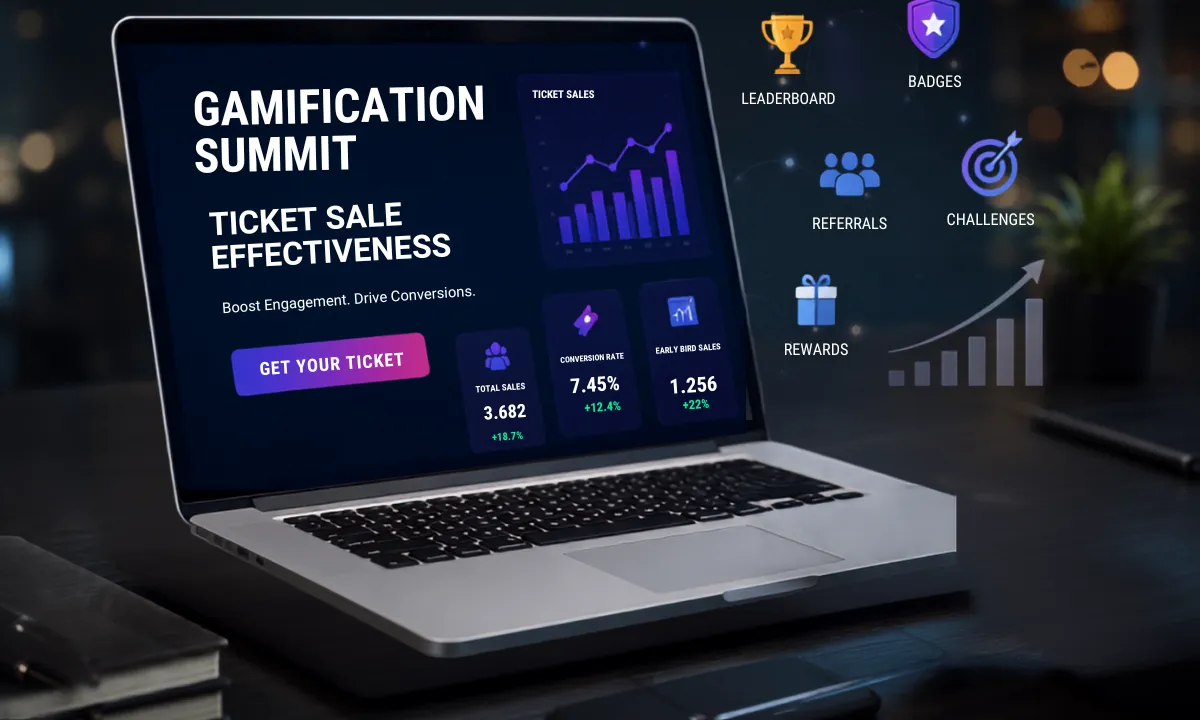
Selling tickets to events has become very competitive in this age of information. Event planners are not just competing against other similar events anymore but with an endless list of entertainment options, learning options, and networking options online. Gamification has become the solution for most marketers trying to promote their events.
GamificationSummit Ticket Sale Effectiveness is basically the influence of gamification efforts in the improvement of ticket sales, attendance, referral marketing, and profitability of events. Gamification involves the use of various elements from the game industry in order to make the purchase process more interesting.
This guide explains how gamification improves ticket sales, the success measures applied, the best practices involved, examples, and future trends.
What Is GamificationSummit Ticket Sale Effectiveness?
GamificationSummit Ticket Sale Effectiveness is the metric that measures the success of using gamification elements in boosting ticket sales for the event and improving the level of customer engagement.
Instead of using the traditional advertising approach, gamification motivates users to engage in actions that will make their purchasing process more interesting and motivating. The list of such actions includes referral contests, social media sharing, loyalty programs, milestones, competitions, etc.
The effectiveness of such an approach is calculated by means of ticket conversion rates, number of referrals sold, engagement level, attendee retention rate, ROI, etc.
Why Ticket Sale Effectiveness Matters for Events
Ticket sales are a major source of income for most events such as conferences, summits, festivals, and networking events. Ticket sale effectiveness has a direct bearing on the profitability of any event.
Some of the reasons why it is important to make ticket sales effective include:
- Greater income
- Greater attendance at the event
- Better audience engagement
- Increase in brand visibility
- Greater satisfaction among attendees
- More community building
With more money from ticket sales, organizers will be able to improve the attendee experience and attract better speakers.
How Gamification Improves Event Ticket Sales
Referral Reward Programs
Referral reward programmes are used to get existing event attendees to refer their colleagues and friends in return for some rewards.
Examples of referral rewards may include:
- Discounted entry fees
- VIP entry
- Especial merchandise
- Exclusive event sessions
- Special networking events
Given that recommendations from people known to an individual are more effective than advertisements, referral reward programmes can greatly increase ticket sales.
Points-Based Reward Systems
With a points reward programme, users earn points for undertaking certain activities, such as:
- Buying tickets
- Sharing event information
- Inviting new participants to the event
- Taking part in contests
- Liking posts on social media sites
The points earned by the users can later be used to claim some prizes.
Leaderboards and Competition
Everyone is inherently competitive. The event organizers can capitalize on this through leaderboards that sort participants depending on referrals, shares, or engagement rates.
Advantages are:
- Increased participation rate
- More social media sharing
- Higher referral rates
- Better awareness for the event
The winners may get some incentives like VIP passes or backstage passes to the event.
Achievement Badges and Milestones
An achievement system helps in giving attendees a feeling of satisfaction.
Some examples are:
- Early Bird Champion Badge
- Top Referrer Award
- Community Ambassador Badge
- VIP Insider Badge
These are the incentives that motivate participants to do certain things and also create an emotional attachment to the event.
Key Metrics Used to Measure Ticket Sale Effectiveness
The success of gamification campaigns should be measured using clear performance indicators.
| Metric | Purpose |
|---|---|
| Conversion Rate | Measures how many visitors purchase tickets |
| Referral Sales | Tracks ticket purchases from referrals |
| Revenue Per Attendee | Evaluates profitability |
| Repeat Attendance Rate | Measures attendee loyalty |
| Social Media Engagement | Assesses audience interaction |
| Cost Per Acquisition | Calculates marketing efficiency |
| ROI | Determines overall campaign success |
Tracking these metrics helps organizers identify which gamification tactics generate the highest returns.
Benefits of GamificationSummit Ticket Sale Effectiveness
Higher Conversion Rates
Interactive experiences encourage visitors to take action more frequently than static promotional campaigns.
Increased Social Sharing
Gamification motivates users to share content with friends and followers, expanding event reach organically.
Better Audience Engagement
Participants become active contributors rather than passive viewers, resulting in stronger connections with the event brand.
Reduced Marketing Costs
Referral-based campaigns often lower customer acquisition costs compared to paid advertising.
Stronger Brand Awareness
Gamified experiences generate excitement and conversation around the event.
Improved Customer Retention
Attendees who enjoy engaging experiences are more likely to return for future events.
Psychology Behind Gamified Ticket Sales
Knowledge about human behavior is essential in developing a gamified campaign.
Reward Motivation
Individuals have the innate motivation to work toward rewards and recognition. Incentives, even minor ones, can greatly enhance participation.
Social Proof
Individuals are more inclined to engage in an activity if other participants are doing the same.
Fear of Missing Out (FOMO)
Timed rewards and exclusive perks induce a sense of urgency, prompting quicker purchasing.
Achievement Satisfaction
Earning badges or completing challenges creates a sense of satisfaction and achievement.
Real-World Examples of Gamification in Event Marketing
Referral Contests
Participants battle each other to create the maximum number of ticket referrals.
Early-Bird Contests
Extra prizes await those participants who buy their tickets within specified deadlines.
Ambassador Contests
The members of the community refer others to the event and win prizes according to their performance.
VIP Unlock Contests
Some special experiences become unlocked for participants only after accomplishing some milestones.
All these strategies have been applied by conferences, trade shows, business summits and entertainment events all around the world.
How to Calculate Event Ticket Sale ROI
Measuring return on investment helps determine whether gamification efforts are worthwhile.
ROI Formula
ROI = ((Revenue Generated – Campaign Cost) ÷ Campaign Cost) × 100
Example
- Campaign Cost: $5,000
- Additional Ticket Revenue: $20,000
- ROI = (($20,000 – $5,000) ÷ $5,000) × 100
- ROI = 300%
This means every dollar invested generated three dollars in profit.
Common Challenges and Solutions
Low Participation Rates
Solution:
Make the tasks easy to understand for the players.
Insufficient Reward System
Solution: Provide rewards that add value to the participants.
Analyzing is Tough
Solution: Utilize analytics tools and referral tracking systems.
Budget Constraints
Solution: Concentrate more on digital rewards and unique experiences rather than material rewards.
Complex Mechanism
Solution: Make sure the mechanism is easy to understand for the participants.
Best Practices for Maximizing Ticket Sale Effectiveness
Make Participation Easy
Complexity usually tends to discourage participation.
Offer Meaningful Rewards
Ensure that your rewards are relevant to the audience.
Promote Using Different Platforms
Consider email marketing, social media, influencer partnerships, and community networks.
Generate Urgency
Urgency can help you convert more attendees.
Monitor Performance
Analyze performance using critical metrics.
Gamification vs Traditional Ticket Marketing
| Feature | Traditional Marketing | Gamification |
|---|---|---|
| Audience Engagement | Low | High |
| Social Sharing | Limited | Extensive |
| User Participation | Passive | Active |
| Referral Potential | Moderate | Strong |
| Brand Loyalty | Average | High |
| Conversion Rate | Moderate | Higher |
Gamification transforms attendees from passive consumers into active promoters.
Future Trends in Gamified Event Ticket Sales
Artificial Intelligence Personalization
AI has been and continues to be used to provide personalized rewards and recommendations driven through the behavior of users.
Mobile-First Experiences
Gamification will experience a shift toward mobile apps along with real-time engagement.
Community-Based Challenges
There will be events to stimulate continuing engagement before, during, and after the event.
Predictive Analytics
Organizers will rely on data to predict attendee behavior and streamline campaigns.
Interactive Event Ecosystems
Ticketing, networking, learning, and rewards will all be blended into single digital experiences for future events.
Ticket Sale Effectiveness Checklist
Before undertaking your gamified ticket giveaway campaign, make sure that you have all of the following:
- Clearly defined objectives
- Attractive reward system in place
- Referral tracking mechanism
- Simple participation rules
- Social media promotion strategy
- Performance metrics
- User experience testing
- Event analysis readiness
This checklist can help you achieve success in your campaign.
Conclusion
GamificationSummit Ticket Sale Effectiveness shows how interactive marketing strategies could change ticket sales at events. Incorporating rewards, challenges, leader-board, referral, and achievement systems into the game (gamifying) helps organizers make experiences that lead to higher conversion rates, enhance community participation, and increase revenue as well.
With the competition for attendee attention becoming even fiercer, gamification will become an even more relevant piece of the event marketing puzzle. By using data-driven gamification strategies now, organizations will be able to set themselves up for greater attendance generation, better ROI potential, and stronger connections with their audiences.
FAQs
What is GamificationSummit Ticket Sale Effectiveness?
It means measuring the effectiveness of gamification strategies to boost ticket sales, participation in events and revenue generation.
How does gamification drive ticket sales?
Gamification is using rewards, competition, referrals and interactivity to encourage ticket purchasing behaviour.
Which gamification strategy works best?
Among the best are referral programs, leaderboards and achievement-based rewards.
What metrics should organizers track?
Key metrics include conversion rate, revenue per attendee, referral sales, customer acquisition cost, and overall ROI.
Also read about: Get in Touch PlayBattleSquare: Your Complete Guide to Connecting with the Gaming Community