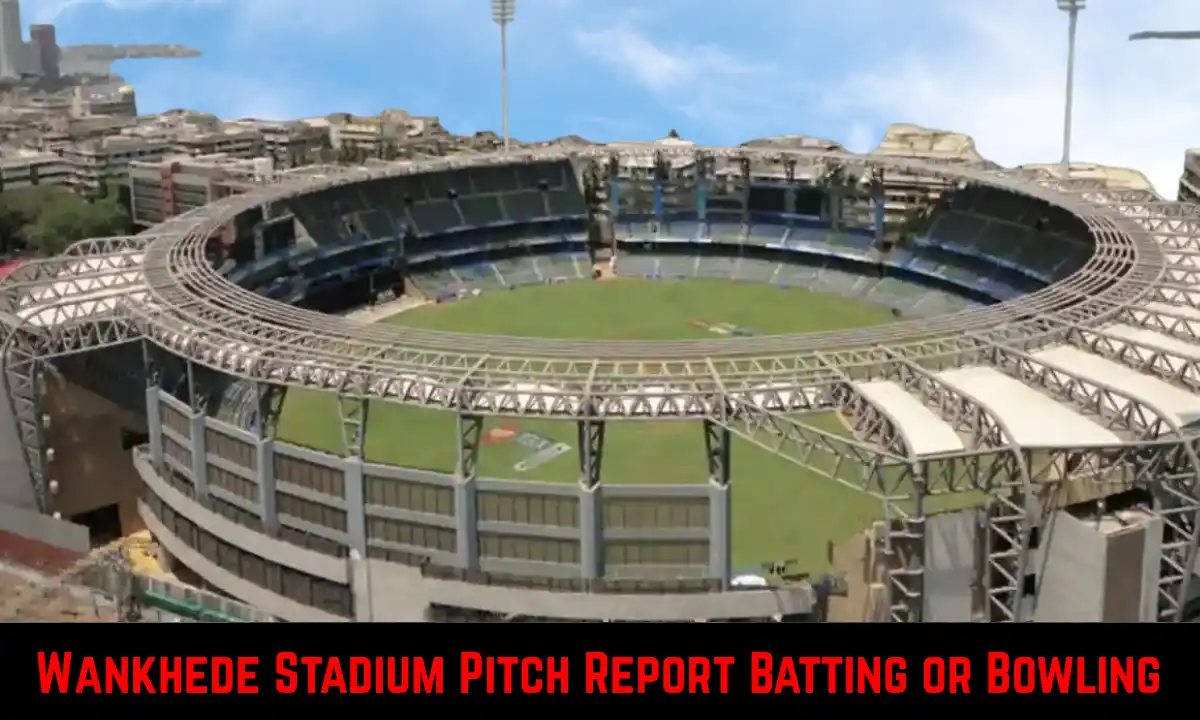
Wankhede Stadium is one of the most popular cricket grounds in India, famous for its high-scoring matches and electrifying atmosphere. This stadium in Mumbai is the ground where we’ve witnessed many historic moments, including the 2011 World Cup final. As IPL 2026 and more top-end fixtures loom, mastering how the Wankhede pitch works is key for fans, fantasy players, and analysts. In this article, we will also read about Wankhede Stadium Pitch Report Batting or Bowling, Batting Conditions, Highest and Lowest Scores Recorded, and more.
Wankhede Stadium Overview
Wankhede Stadium is the home ground of the Mumbai Indians in the IPL. It was built-in 1974. However, renovations ahead of the 2011 World Cup reduced its capacity to around 33,000, albeit with better overall facilities.
It is located right along the Arabian Sea, which means humid coastal air and breeze are factors that can have a huge bearing on match conditions, especially swing and dew.
Wankhede Stadium Pitch Report Today
In IPL, the Wankhede pitch has played consistently and in kind to a batting-friendly surface as it has in raw matches. The surface is good for pace and bounce, which allows the batters to execute their shots freely.
- New ball: Fast bowlers get assistance with swing
- Middle overs: Balanced phase
- Flat pitch, cost of runs in the death overs
Either way, brace yourself for a run fest; all sounds suited to T20.
Is Wankhede Stadium Pitch Batting or Bowling Friendly?
Wankhede pitch is known to be a batting-friendly one, especially in white-ball cricket.
- Short boundaries favor big hitters
- Even bounce supports stroke play
- Fast outfield increases boundary count
But bowlers — and pacers in particular- do get some help if they bowl early on.
Final verdict: Very much a batting surface, with a little early help for pace.
Nature of the Pitch at Wankhede Stadium
Wankhede is a ground with red soil pitches, where:
- Consistent bounce
- Good carry for fast bowlers
- Minimal uneven movement
The pitch assists the bowlers in the initial overs, also with moisture and breeze, but as it gets older, it becomes flatter, making batting easier.
Batting Conditions at Wankhede Stadium
Wankhede gets great batting-friendly conditions:
- Quick outfield speeds up scoring
- Short boundaries (around 65–70 meters)
- High run rates (8+ in T20s)
The scores of 170–180+ are competitive in most T20 matches, while those above 190 are a defendable total.
Bowling Conditions at Wankhede Stadium
It is not easy bowling on Wankhede, particularly in the second innings:
- The fast bowlers get swinging it early.
- Very little help for spinners, but good to bowl in middle overs
- Your context is around death overs, yorkers, and slow balls;
Bowlers depend on smart execution rather than pitch assistance.
Fast Bowlers vs Spinners: Who Gets More Help?
Wankhede is favourable for fast bowlers:
- Pacers are claiming about 65-70% of wickets
- Spinners play a supporting role
The seamers and the new ball get the advantage from bouncing and coastal breeze first up, with spinners only being effective when there is a bit of slowdown in the pitch.
Toss Factor at Wankhede Stadium
The toss is crucial for the outcomes of matches:
- Teams generally like to chase down Target.
- The edge for chasing teams
On average, teams that chase win 55% of the matches they play, and it has always been a preferred option.
Average Scores at Wankhede Stadium (T20, ODI, Test)
| Format | Average 1st Innings | Average 2nd Innings |
|---|---|---|
| T20 | 170–175 | 155–165 |
| ODI | 250–270 | 220–240 |
| Test | High scoring early | Slower later |
These averages show that Wankhede is a high-scoring venue, especially in shorter formats.
Highest and Lowest Scores Recorded at Wankhede Stadium
| Format | Highest Total | Lowest Total |
|---|---|---|
| T20I | 254/9 (WI vs ZIM) | 80 (INDW vs ENGW) |
| ODI | 438/4 (RSA vs IND) | 55 (SL vs IND) |
| IPL | 235 (RCB vs MI) | 67 (KKR vs DC) |
Highs reflect batting paradise; lows from collapses.
Wankhede Stadium IPL Pitch Report
Wankhede is popularly known as a batting paradise in the IPL:
- Average score: around 170+
- Strike rates and six-hitting frequency
- Ideal for aggressive players
The Pitch doesn’t change and will provide thrilling contests in the season.
Performance of Teams Batting First vs Chasing
| Strategy | Win Percentage |
|---|---|
| Batting First | ~45% |
| Chasing | ~55% |
Chasing teams perform better due to dew and improving batting conditions.
Weather Conditions and Their Impact on Pitch
Mumbai weather is a big factor as to how the pitch behaves:
- Temperature: 28–32°C
- Humidity: 60–75%
- Coastal breeze aids swing
Dew plays a huge part in the second innings as hot conditions to begin with keep the pitch well and truly firm but then it will become dewy later on due to humidity.
Wankhede stadium statistics and records
- Over 100 IPL matches hosted
- Average IPL score: ~170
- Chasing success rate: ~55%
- Short boundaries boost six-hitting
- Leading IPL run-scorer: Rohit Sharma
These stats are proof of Wankhede being a run-scoring paradise and an entertainer for the audience.
Conclusion
Wankhede Stadium remembered as a batting paradise, also exciting and high scoring matches even in T20 cricket. Although fast bowlers can get a bit of movement at first, the pitch plays true and its outfield is quick offering up runs aplenty for batsmen. The dew factor too tilts the balance in favour of teams chasing and hence toss also becomes an important part of this game. In general, the teams that adapt to conditions with chase capability and dew management along with their strategy are bound for success, this is what makes Wankhede one of the most electrifying cricket venues in the world.
Also read about: Top 10 Most Dangerous Batsmen in IPL: Power Hitters, Finishers & Six-Hitting Kings